Sustainable and secure smallholder systems
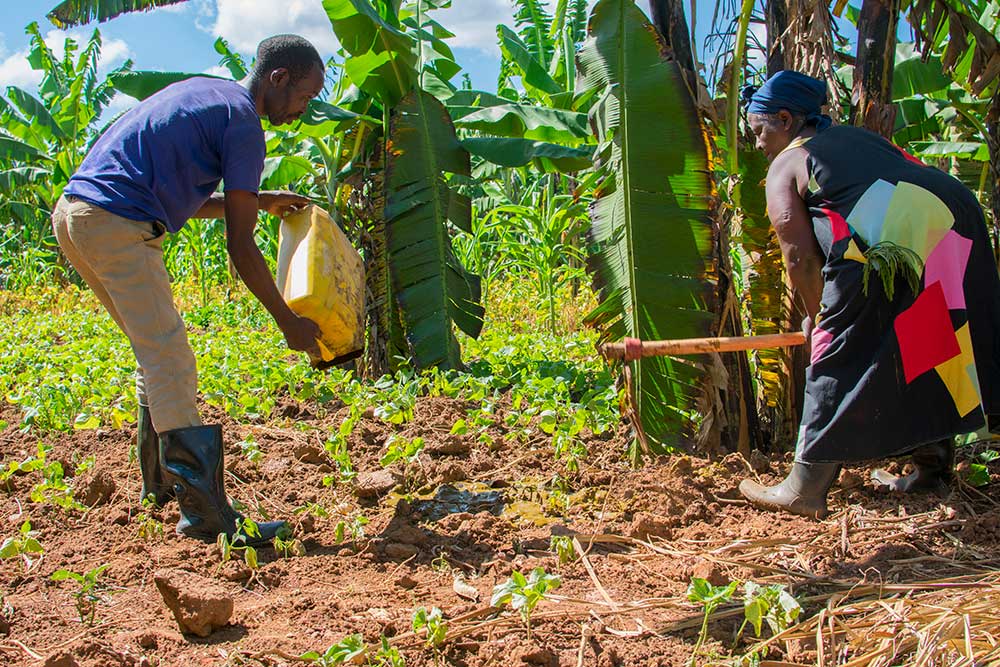
Kenya and Uganda Hivos and ECOM Agroindustrial Corporation in East Africa are teaming up in a public–private partnership to create viable coffee-based farming systems for 80,000 farmers in the region.
Sustainable
Smallholder
Secure
Systems
Our Journey for Productivity
Contrary to most standard sustainability schemes, our model ensures that the producers own their prices and hence resulting in true empowerment.
Between 2006 and 2011, Ecom and Hivos piloted an Aggregator Model on Continuous Improvement (AMCI).The approach sought to address challenges at producer level that affected the quality of coffee and inhibiting production of quality produce. The approach showed that after 3 years of support, the average yield per tree had more than tripled with an increase from 1kg per tree to 3.5kg per tree. The average share of premium grades had improved from 26% to 85% resulting in a 69% increase in income.
Out of these experiences the 4S@Scale partnership was born in 2014. The Public Private Partnership sought to create viable coffee-based farming systems for 80,000 farmers in the region. Beyond intensifying and expanding ongoing farmer support in Good Agricultural Practices and climate adaptation. The programme also sought to support Farming households to diversify their income through commercial dairy and biogas activities. The programme further acknowledge the lack of visibility and inclusion of women in the value chain despite the significant contribution they make at farm level. To address this the programme gave high priority to drawing women and youth into economic activities that will help them generate independent incomes.
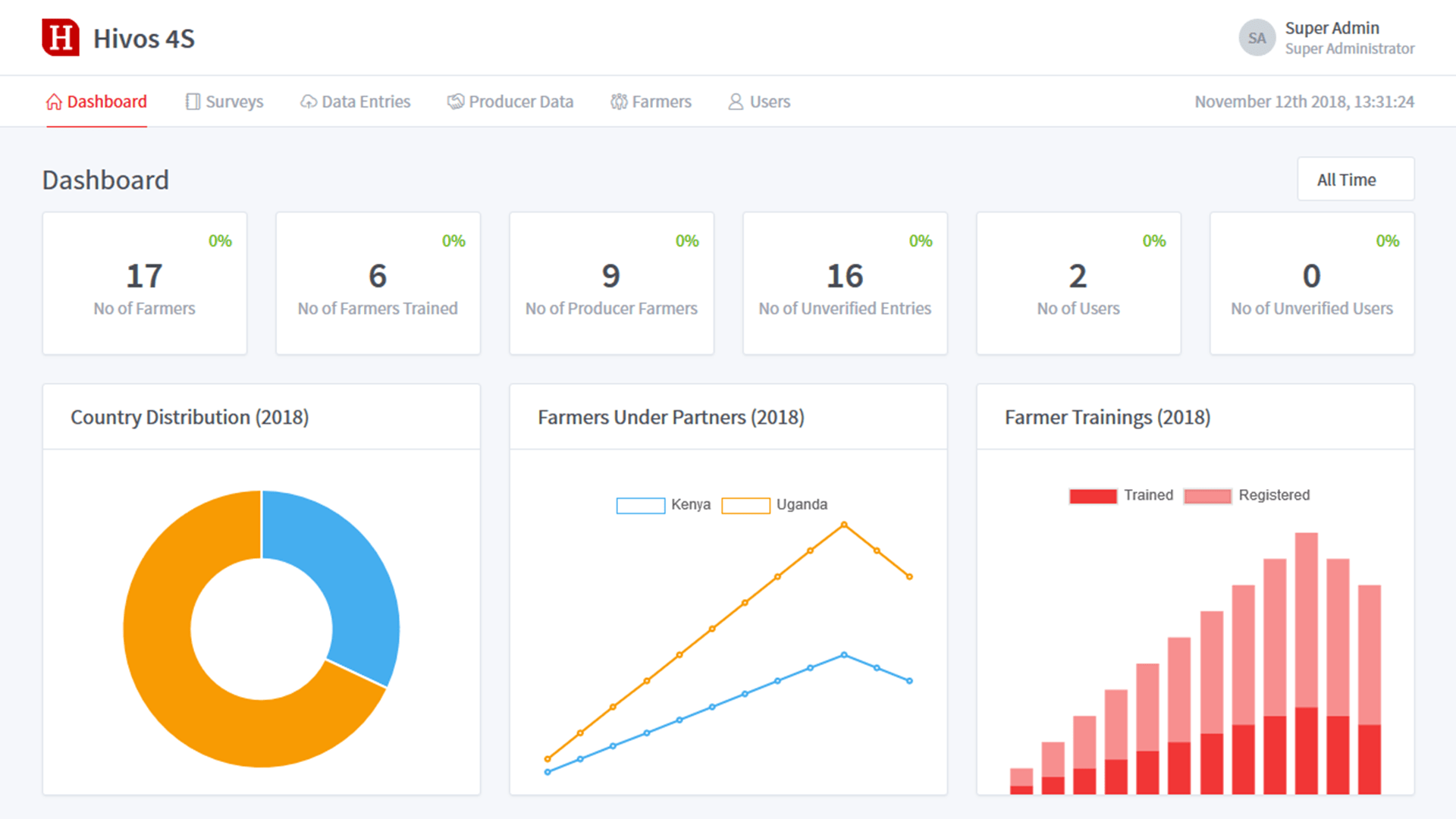
Farmers
Farmers Trained
Producers
Cooperatives
Where are we today?
Social Outcomes
Economic Outcomes
Productivity Outcomes
Structural Outcomes
Are we there yet?
While we have made considerable impacts at farmer level through the support of the Dutch Government through the RVO. We feel there’s is more to be done. For the journey of change to adopt the use of organic fertilizers through the use of bio-digesters requires considerable investments in terms of making the cost more affordable while still accelerating efforts towards adoption of correct application practices.
Through numerous studies and anchored on our routine data collection, we have proved the case for bio-slurry not only for coffee but also for other cash and food crops. We are beyond the proof of concept as regards what quantities are required to result in the productivity changes. Our focus presently is on increasing pathways towards increasing acquisition of this technology by smallholder farmers while gradually reducing the reliance on chemical fertilizers. To further anchor this, we are increasing our efforts in supporting the farmer extension model to ensure adoption of practice.